
Defensible Space
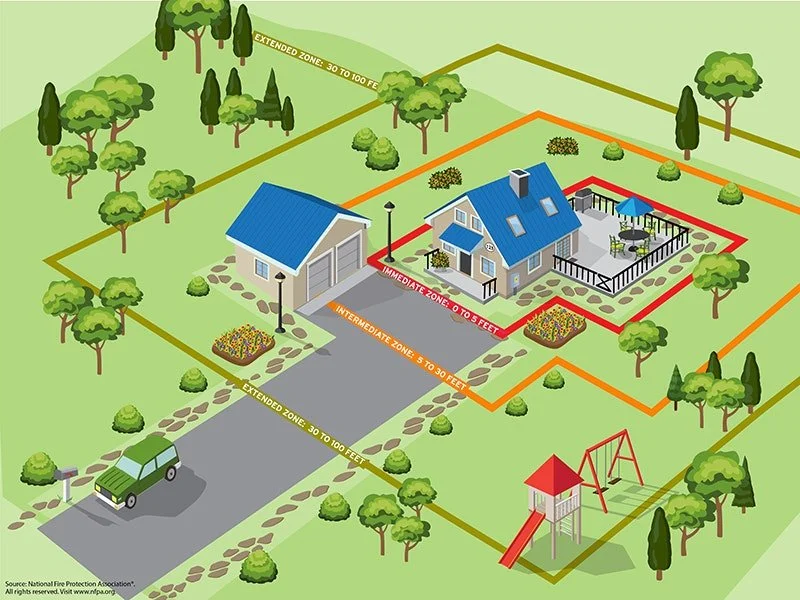
Defensible space is the creation and maintenance of buffer zones around your home or other structures, also known as “home ignition zones”, in order to minimize impacts from fire. In those zones, vegetation or other hazardous fuels are either not present or only present in certain quantities and arrangements based on certain distances away from the home. Adequate defensible space helps to prevent fire from spreading to or from your home, reduce the risk of total home destruction from fire, and increase safety and accessibility to firefighters around the outside of all structures.
Zone 0 is the immediate area within 0-5 feet of structures in which hazardous fuels are completely removed or in very limited quantity, therefore reducing the risk that embers, flames, or radiant heat sources will ignite materials that can spread fire to your home. This zone also includes the roof, gutters, chimneys, stovepipes, and attached decks and porches. Removing all combustible vegetation from this zone is key, in addition to other measures such as hardscaping and home hardening. Note: tree branches should be removed within 10 feet of chimneys and stovepipes.
Zone 1 is the intermediate area that extends 5 – 30 feet from structures or to your property line, whichever is closer. In this zone, all dead or dry vegetation are removed, tree and shrub canopies are pruned to maintain a 10-foot gap between them, lower branches of trees and shrubs are pruned at least 6 feet off the ground, and grasses and forbs are removed or mowed (non-native invasive plants should be completely removed and not mowed). Note: these principles also apply to the area within 10 feet of driveways and access roads.
Zone 2 is the extended area 30 – 100+ feet from structures. This zone is intended to interrupt a fire’s path from surrounding areas and reduce its energy as it approaches structures. In this zone, trees and shrubs are thinned so their crowns don’t touch, ladder fuels such as small trees and shrubs are removed from under taller trees, and low growing vegetation such as grasses and forbs are sparse or mowed (non-native invasive plants should be completely removed and not mowed).
Additional Tips
Structures on steeper slopes require larger defensible space zones because fire spreads faster uphill.
When measuring zone distances, measure from the outside edge of the eaves and attached decks and patios.
Regularly maintain these zones, especially before and during the spring/summer fire season.
Store firewood piles and outdoor fireplaces and fire pits in Zone 2.
Don’t use chainsaws, welding equipment, outdoor fire places and fire pits, or burn trash piles during windy or Red Flag days.
Don’t use a torch to burn weeds around structures.
Don’t burn trash piles within 100 feet of structures.
Don’t park vehicles on top of tall grasses and forbs.
Secure trailer chains. Dragging chains can spark brush fires.
Remove plants containing resins, oils, and waxes which are ignitable.
Use crushed stone or gravel in Zone 0 instead of flammable mulches.
Remove dead vegetation and debris from under decks and porches and between deck board joints.
Trim vegetation around street signs, house numbers, and other markers so they are visible to fire crews.
Before using a lawnmower, make sure the yard is free of rocks because contact with the lawnmower blades can create sparks.