
Stinknet
Oncosiphon pilulifer
Characteristics of stinknet:
Bright yellow globe-shaped flowers that turn tan when dry.
Flower heads are roughly the size of a pencil eraser.
No ray pedals like other types of sunflowers.
Pungent turpentine-like smell when crushed.
Only grows during the winter/spring.
May have a single or multiple stems.
Can grow into a 2-3 ft shrubby shape.
Can grow as small as a centimeter.
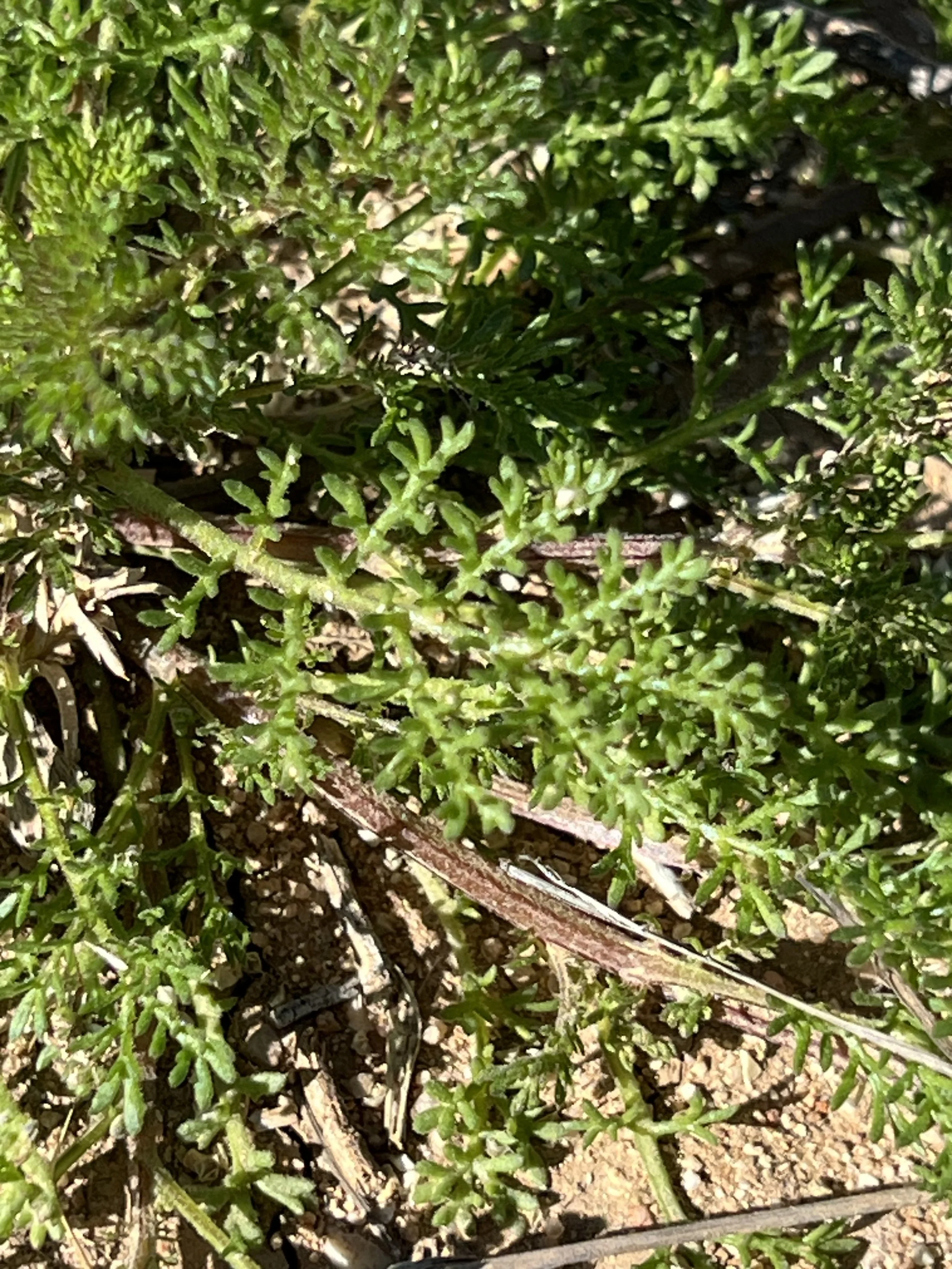
Bright green carrot-like leaves.
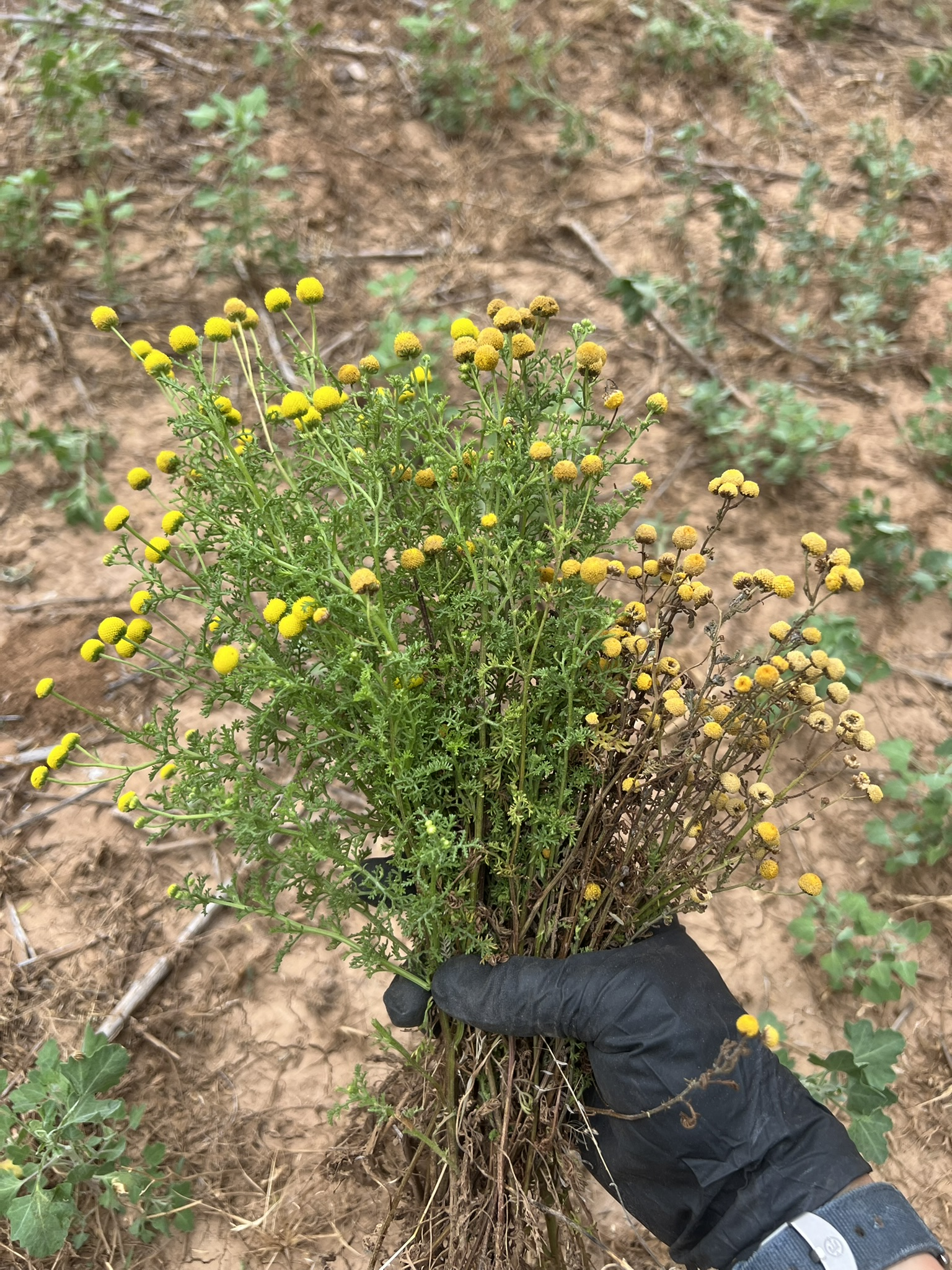
Stinknet seeds can germinate multiple times throughout the growing season. Green and dried plants can be present at the same time.
Why is it a hazardous species?
Causes headaches, respiratory, and/or skin reactions in some people.
Dried plants can spread wildfire and produce caustic smoke.
It outcompetes and displaces native wildflowers.
Degrades rangelands and natural landscapes.
Livestock can get sick if too much is eaten. Can cause bloat or colic.
It has no natural predators in the U.S.
Wildlife will avoid eating it.
It spreads rapidly and exponentially.
How did it get here?
Native to South Africa.
Introduced accidentally to San Diego in the 1980s from increased global travel.
Spread to southern Arizona on vehicle tires along the interstate corridors by the 2010s.
Stinknet leaves look like succulent carrot leaves.
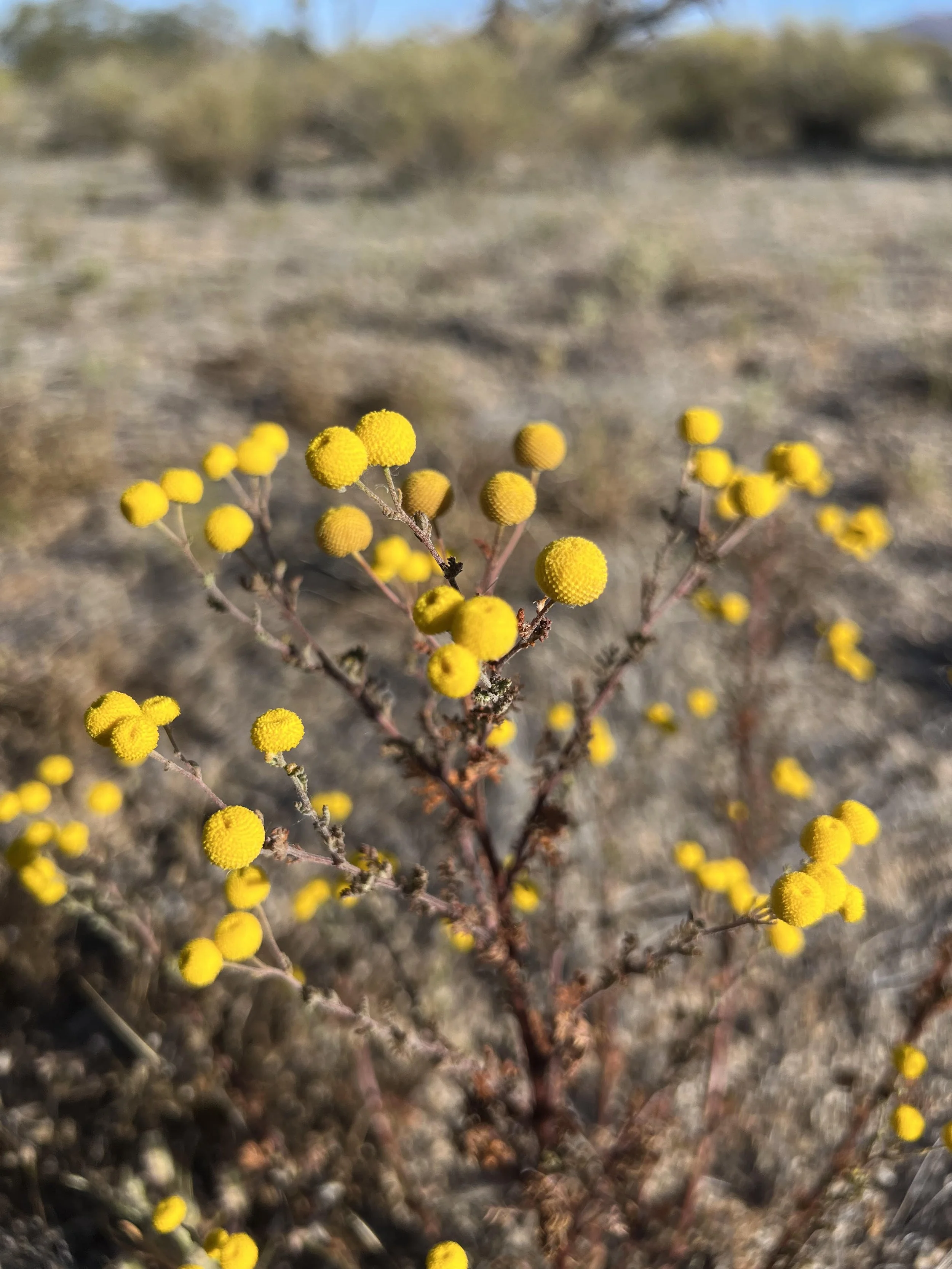
Stinknet belongs to the sunflower family. Dried plants are a fire hazard.
Want to learn more?
Contact us to learn about treatment methods.
Visit stinknet.org to see if it’s been reported near you.
Check out this High Country News article
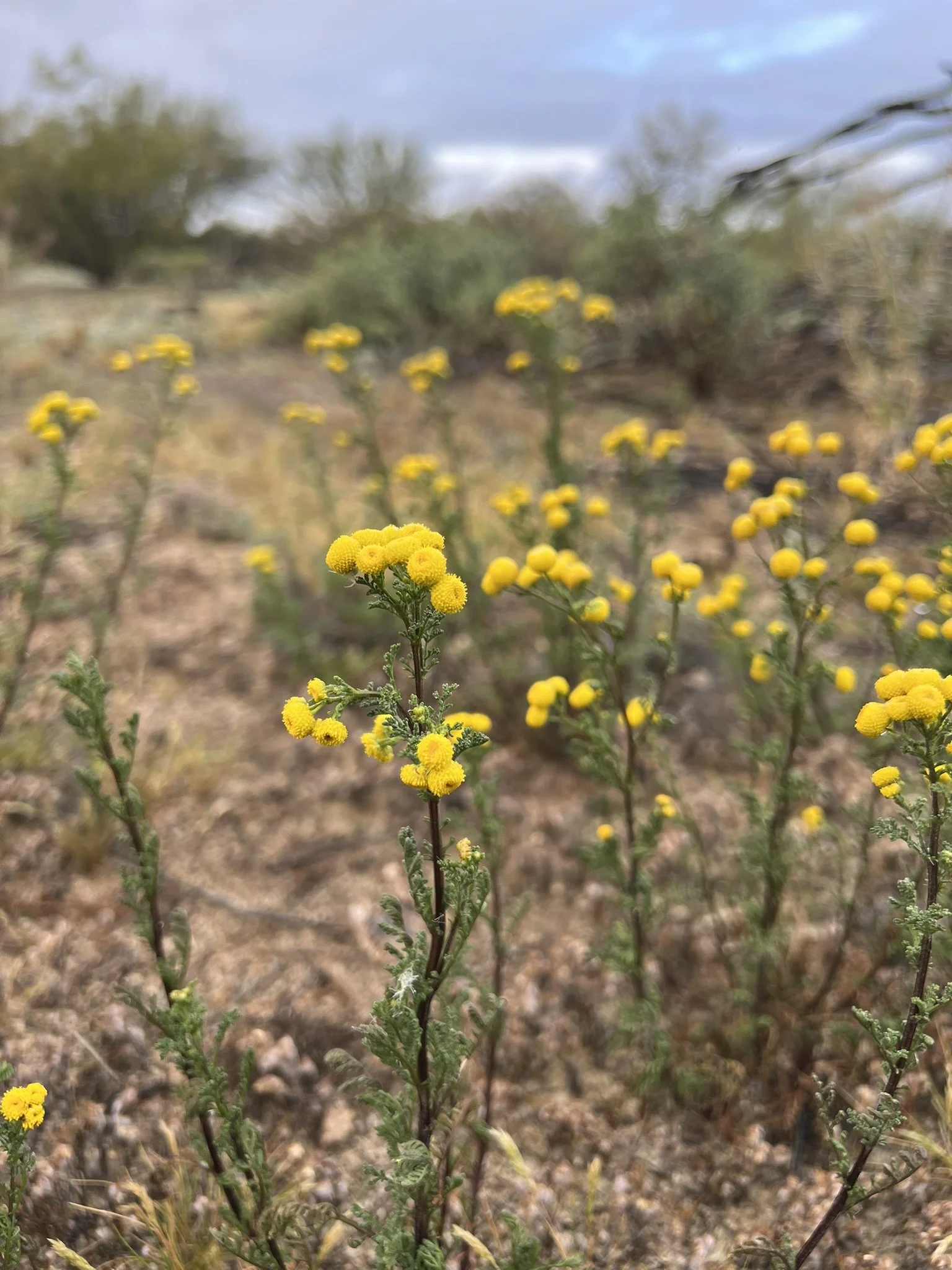
Each stinknet plant can produce hundreds or thousands of seeds.